Imagine the rush of adrenaline when you see a "Congratulations" email sitting in your inbox after weeks of stressful applications. However, in an era where cybercriminals are more sophisticated than ever, that document might be a carefully crafted lie designed to steal your identity. Learning the nuances of a Fake vs Real Offer Letter: How to Tell the Difference is no longer just a career skill—it is a necessary form of self-defense for every modern professional.
You might think you are too smart to be fooled, but recruitment scams have become a multi-million dollar industry. Scammers use high-resolution logos, professional-sounding templates, and the names of real executives to lure you into a false sense of security. In this guide, you will learn exactly how to dissect an offer letter, verify the source of the communication, and protect your personal information from sophisticated predators.
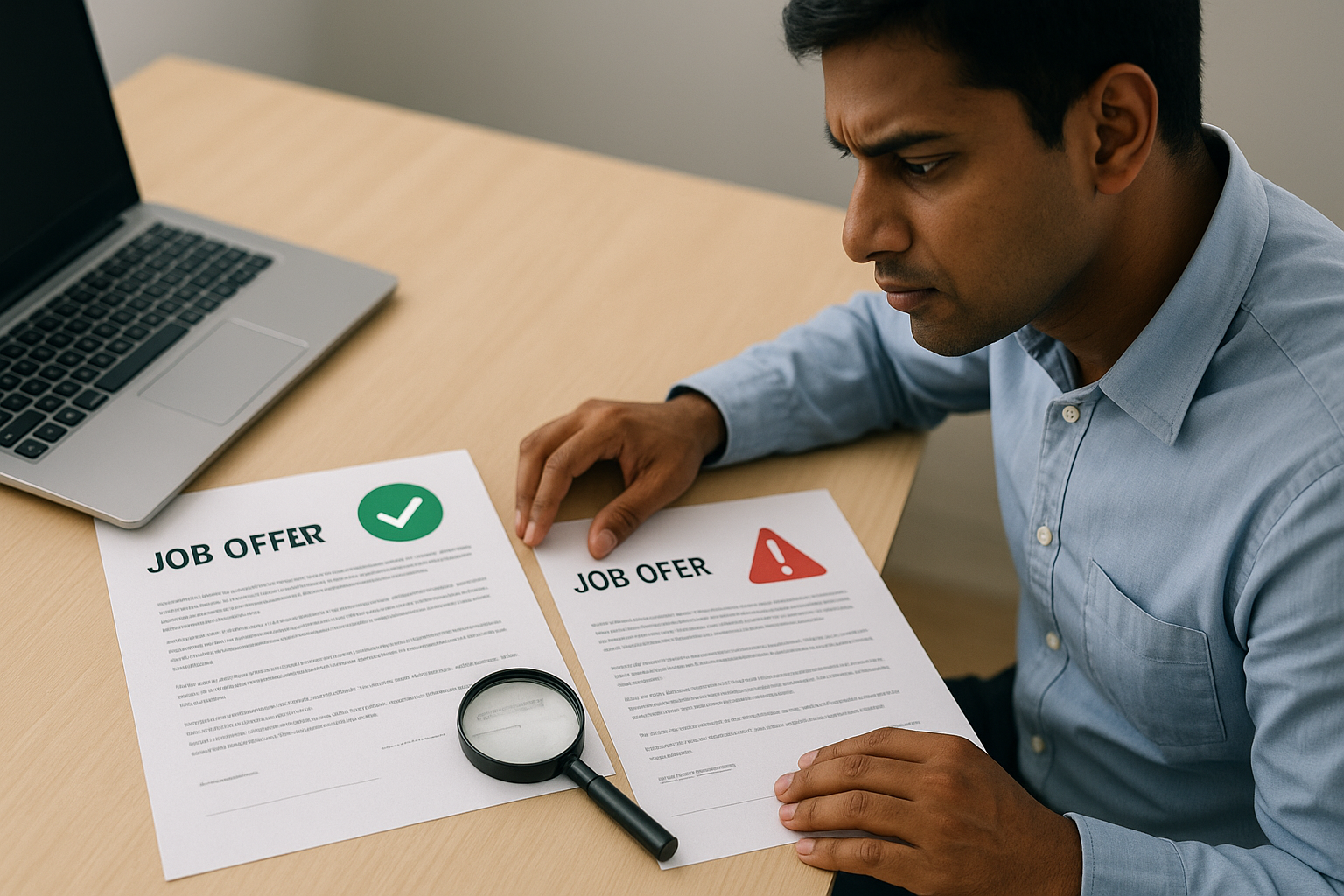
The Rising Tide of Recruitment Scams in the Digital Age
Recruitment fraud is trending globally because the way we work has fundamentally changed. The shift toward remote work has made it normal to be hired by someone you have never met in person. While this opens doors for global talent, it also creates a perfect environment for remote work hiring scams to flourish.
Scammers prey on the desperation and excitement of job seekers, often targeting those who have recently updated their LinkedIn profiles or posted on job boards. They know that a candidate who has been searching for months is more likely to overlook common employment scam warning signs in favor of a high-paying opportunity. This psychological manipulation is the cornerstone of modern fraud.
What readers often get wrong is the assumption that a scam will always look "cheap" or contain obvious spelling errors. While some do, many modern fraudulent offers are indistinguishable from the real thing at first glance. Understanding the scale of the problem is the first step, but how do you actually look at a document and see the lies hidden in plain sight?
Visual Red Flags: Inspecting the Design and Language
A legitimate company spends thousands of dollars on branding and corporate identity. When you receive a real offer, the formatting is usually impeccable, the logos are high-resolution, and the font is consistent throughout the document. If you notice a blurry logo or a mix of different fonts like Times New Roman and Arial in the same paragraph, your internal alarm should go off.
Professional Branding vs. Poor Imitations
Fraudulent letters often use "copied and pasted" logos that appear pixelated when you zoom in on the PDF. They might also use a company name that is slightly off, such as "Amazon Global Careers" instead of just "Amazon." Always compare the branding on the letter to the official company website to ensure every detail matches perfectly.
The Language of Professionalism
One of the most common employment scam warning signs is the use of overly formal or awkward language. Phrases like "kindly respond," "urgent attention needed," or "dear applicant" are often indicators that the letter was written by someone outside the company's official HR department. Real HR professionals use specific, industry-standard terminology and will address you by your full name.
Pay close attention to the grammar and punctuation. While a single typo might happen in a real office, a fake offer often contains multiple errors in sentence structure. While a blurry logo is a giveaway, the most dangerous scams often hide behind a request for your hard-earned money.
The Financial Trap: When They Ask You for Money
This is the single most important rule in the hiring world: a legitimate employer will never ask you to pay them. Whether it is for "training materials," "visa processing fees," or "home office equipment," any request for a wire transfer, cryptocurrency, or gift card is a definitive sign of a scam. This is a core part of how to spot a fraudulent job offer before it costs you financially.
A common tactic involves the "check scam." The scammer sends you a large check to buy equipment from a specific vendor. They ask you to deposit the check and wire a portion of the funds to the vendor immediately. Days later, the bank realizes the check is fake, the money is deducted from your account, and the "vendor"—who is actually the scammer—disappears with your cash.
Real companies provide equipment directly or have a reimbursement process that involves official expense reports after you have started working. They will never ask a candidate to handle business transactions through their personal bank account. Once you have scrutinized the document and the financial demands, the next layer of defense involves looking at the digital DNA of the sender.
Technical Verification: How to Check the Source
The job offer verification process must include a technical audit of the email you received. Scammers often use free email services like Gmail, Yahoo, or Outlook. A real recruiter from a major corporation will always use a corporate email address, such as name@company.com. If the email comes from a generic provider, it is almost certainly a scam.
Be wary of "spoofed" domains that look similar to the real thing. For example, if the real company is "GlobalTech.com," a scammer might register "GlobalTech-Careers.com" or "GlobalTechJobs.net." These look official but are entirely separate entities. Always hover your mouse over the sender's name to see the actual email address hiding behind the display name.
You should also verify a job offer from a company by reaching out through an independent channel. Do not use the phone number provided in the offer letter. Instead, go to the company's official website, find their HR department or a general contact number, and call them to confirm that the person who contacted you actually works there. Technical checks provide hard evidence, yet the way the company treated you during the initial conversation often tells the most revealing story.
The Interview Process: Did It Happen Too Fast?
In the professional world, the hiring process takes time. It involves multiple rounds of interviews, background checks, and discussions with different team members. If you receive an offer after only a text-based interview on Telegram, WhatsApp, or Skype, you are likely dealing with recruitment fraud red flags.
Scammers want to move fast so you don't have time to think or research. A real company wants to ensure you are the right fit for their culture and needs. If you are offered a high-paying role within 24 hours of your first contact, and you haven't had a video call or an in-person meeting, the offer is likely too good to be true.
Ask yourself if the interview questions were specific to the role or if they were generic questions that could apply to any job. Real interviews involve deep dives into your experience and skills. Fake interviews often focus on your availability and how quickly you can start. If the speed of the offer seems suspicious, comparing the specific details against a standard checklist can provide the clarity you need to proceed safely.
Comparing the Details: Fake vs Real Offer Letter Checklist
To help you distinguish between a legitimate career opportunity and a trap, use this comparison table to evaluate every document you receive. If your offer letter checks more than two boxes in the "Fake" column, proceed with extreme caution.
| Feature | Real Offer Letter | Fake Offer Letter |
|---|---|---|
| Email Domain | Matches official company site (e.g., @apple.com) | Generic (Gmail) or misspelled (e.g., @apple-jobs.com) |
| Interview Style | Multiple video/phone/in-person rounds | Text-only, chat apps, or no interview at all |
| Financial Request | None. Company pays for everything. | Asks for fees, equipment buy-back, or check deposit |
| Personal Info | Collected via secure HR portal after signing | Requested via email or chat (SSN, Bank login) |
| Salary/Benefits | Competitive and realistic for the role | Unusually high pay for very little work |
Beyond the table, checking the authenticity of an appointment letter involves looking for a specific job description. Real offers include detailed lists of responsibilities, reporting structures, and clear benefit explanations. Fake offers are often vague about what you will actually be doing day-to-day. With the checklist in hand, you are better prepared to handle common questions that arise when navigating these murky waters.
Frequently Asked Questions
Can a fake offer letter have a real employee's name?
Yes, scammers frequently use LinkedIn to find the names of real HR managers or CEOs to make their documents look authentic. They may even link to the real person's profile in their signature. Always verify the communication by contacting the company through their official, public-facing website rather than the links provided in the email.
What should I do if I sent my ID to a scammer?
If you have shared sensitive information like your Social Security number or a photo of your ID, you must act quickly. Place a fraud alert on your credit reports with agencies like Equifax, Experian, and TransUnion. Monitor your bank accounts for suspicious activity and consider filing a report with the FTC or your local law enforcement.
Why do scammers offer such high salaries?
High salaries are used as "bait" to bypass your critical thinking. When you see a salary that is 30% or 50% higher than the market average, the dopamine hit can make you ignore other red flags. Always research the average pay for the job title in your geographic area using sites like Glassdoor or Payscale to see if the offer is realistic.
Are all remote jobs that use chat apps scams?
While many legitimate companies use Slack or Microsoft Teams for internal communication, they rarely use Telegram or WhatsApp for the initial hiring and onboarding process. If a company insists on using a personal messaging app for professional hiring, it is a significant red flag. Legitimate remote employers will still insist on a formal video interview to verify your identity.
Protecting Your Professional Future
Navigating the modern job market requires a balance of optimism and skepticism. While most companies are looking for great talent, a small number of bad actors are looking for easy targets. By staying vigilant and performing a thorough job offer verification process, you can ensure that your next career move is a step forward rather than a costly mistake.
Remember that a real employer will respect your need to verify information and will never pressure you into making immediate financial decisions. If an offer feels off, trust your gut and do the extra research. Knowing the difference between a Fake vs Real Offer Letter: How to Tell the Difference is the best way to keep your identity and your finances secure as you pursue your dream career.
Stay informed, stay cautious, and always double-check the details before you sign on the dotted line. Your career is worth the extra ten minutes of verification.

Comments
Post a Comment